Signs It’s Time to End a Connection with Someone
There’s a rise in adult children cutting off their parents. People are leaving their partners. Long-term friendships are ending. What is causing this uptick in connection cutoffs? The short answer is mental health. As mental health awareness continues to lose its negative stigma, many are realizing its importance and how close connections have a rather significant impact on mental health. The times of just putting up with people based on labels are ending. Being a mother, husband, or best friend alone is not enough to keep access to others; instead, connections are now being evaluated on actions, substance, and mental health support. Still, it can be challenging to end certain connections. When are relationships salvageable, and when are they worthy of ending? Let’s take a look at these common signs that it's time to end a connection.
1.Poor Communication and Understanding
Poor communication is at the heart of many challenging relationships. Everyone communicates differently; some are direct, and others are passive. Some avoid conflict, and others jump right in. What I've found to be useful is the ability to be balanced and flexible when communicating with others. This level of flexibility comes with increased understanding not only of the person you are interacting with but also of yourself. Those with increased self-awareness have the capacity to admit when they're wrong, express when they feel wronged without attacking, and acknowledge their emotions and those of others. If this were more common, more relationships could be saved.
However, rather than demonstrating emotional intelligence and communicating with balance, some speak solely from their egos. This causes a clash in many connections. So when is it enough? If you are in connection with someone who lacks the capacity to communicate effectively, understand themselves, understand your perspective, and not lead with ego, then you should consider letting that connection go. It’s also important to note that hostile communication, such as yelling, screaming, and cursing, adds significant damage to a relationship and should not be tolerated.
2.There’s a Presence of Manipulation
Manipulation is a huge red flag that should be taken seriously. It's important to note that connections built on manipulation are far from genuine. This means that secrets, lies, and gaslighting were used to sustain the connection. Real connection doesn't require a facade, a performance, or any over-the-top actions. This doesn't mean manipulation is always easily identifiable; sometimes it's very subtle, and you don't realize it until you notice toxic patterns in the dynamic.
Here are common signs they are manipulating you:
Their Actions Don't Align with Their Words
They Minimize Their Wrongs and Your Pain
They Maximize Your Wrongs and Their Pain
You Often Get The Silent Treatment/Stonewalling
They Triangulate You To Make You Feel Powerless
They Have Random Bursts of Loving You (Often As An Apology)
Manufacturers’ Competition or Jealousy To Feel Important
Blames Their Poor Behavior on External Factors
Provides Mismatched and Unnecessary Details In Explanations
***I once dated someone who lied to me about who they were to secure access to me. They told me they were celibate for months and were single for almost a year. They said they were ready for a relationship and to move forward with their lives. This wasn't a requirement for me; they voluntarily disclosed this information because they knew it would make them appear to “have it together” or to have mature appeal. And I admit, it worked at first, as someone who had practiced celibacy for a while, I thought we shared a common experience. From this situation, I realized that manipulation was often an attempt by the manipulator to sell an image of themselves that did not exist; they are the opposite of what they portray. For instance, instead of being the celibate person who had enough time to heal from their past relationship, it was the opposite. They, in fact, were sexually active with many people, and never gave themselves time to heal from the relationship that had just ended shortly before we met. Obviously, this connection ended, not because of who they were but because of their lies and manipulation to gain more appeal. It’s always counterproductive to lie about who you, as it creates misalignment and poor connections.
3.There is Resentment, and It’s Not Going Away
There's a common saying that resentment is a sign you didn't stand on business. And for the most part, this is accurate. Resentment in romantic relationships and friendships stems from being treated unfairly and from your sticking around. For instance, your friend never repaid you after you loaned them rent for one month. Or you’re in an established monogamous relationship, and your partner goes on a date with someone else. Everyone reacts to things differently, and context is essential. However, these two scenarios will piss off most people. What would you do in this situation? How would you respond to this disrespect? These situations may pressure you to crash out. But from personal experience, that's never a good route for you or the other person.
The two emotionally regulated options are to forgive or end the connection gracefully. Here’s why. It is not the other person's responsibility to deal with your emotions, even if they are the ones who hurt you. Of course, someone with remorse will apologise, make up for their wrong, and never repeat the action. But you can't expect everyone to be that person. Unfortunately, the opposite is more common. Be prepared to be met with defense, minimization, or even the reversal of blame onto you (DARVO). If this occurs, remove access and never look back. It’s better than being in a connection where you have unresolved resentment for how you were treated. In other cases, you may decide to give grace and stay connected. If you give grace, then live up to that. It’s unfair to constantly bring up the situation if you vowed to move forward. Still, genuine effort and remorse from the other party are needed to move on entirely.
In family situations, it may not be as black-and-white. Oftentimes, there’s resentment from childhood, making it harder to process as an adult. Context plays a huge role in family dynamics as well. For instance, any type of emotional, physical, or sexual abuse experienced as a child is severe, causing PTSD and trauma. Or maybe there was sibling rivalry or the parent treated the other better, less severe, but still damaging. Because families differ and have diverse cultural backgrounds, family therapy is highly recommended in these situations. If that's not an option and interacting with family is not suitable for your mental health, then distance is understandable.
4.It’s One-Sided and Your Side is Empty
Have you ever poured into a relationship but didn't get much back? With one-sided relationships, you are essentially maintaining the whole connection. And without your effort, the relationship wouldn't exist. This could look like allowing a friend to vent to you about their problems, listening, and trying to help in any way you can. But when you have an issue, they don't really listen, they're uninterested, and they rush over the topic. Or maybe you’re the only one planning date night in your relationship.
The thing with one-sided relationships is that sometimes the passive party is unaware that they are not pouring into you. It’s best to have a conversation before cutting out this connection. Maybe they have issues showing affection, paying attention, or initiating things. Whatever the case, having a conversation gives them a chance to be informed. After that, they can either step up in the connection or continue as usual. You, on the other hand, will see how they react to your plea for reciprocity.
It’s important to note that some are entirely aware of not reciprocating in relationships, as they prefer to take and fear giving too much of themselves. Whether they are aware or not, I believe actions speak louder than words. The way people treat you, their mannerisms toward you, and how they talk to you are all based on how they see you and how important you are to them. So if someone is not pouring into you the way you pour into them, please ask yourself whether that aligns with someone who actually cares about you.
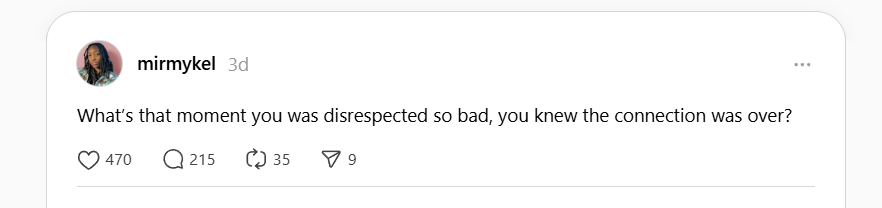
When Did You Know It Was Time to End a Connection?
I popped the above question on my personal threads account and was met with many stories. Whether it was family members, friendships, romantic relationships, or professional ones, many had to end connections that were no longer healthy for them. Feel free to share your story.