

Fur Babies, Mental Health, and New Pet Parent Trends
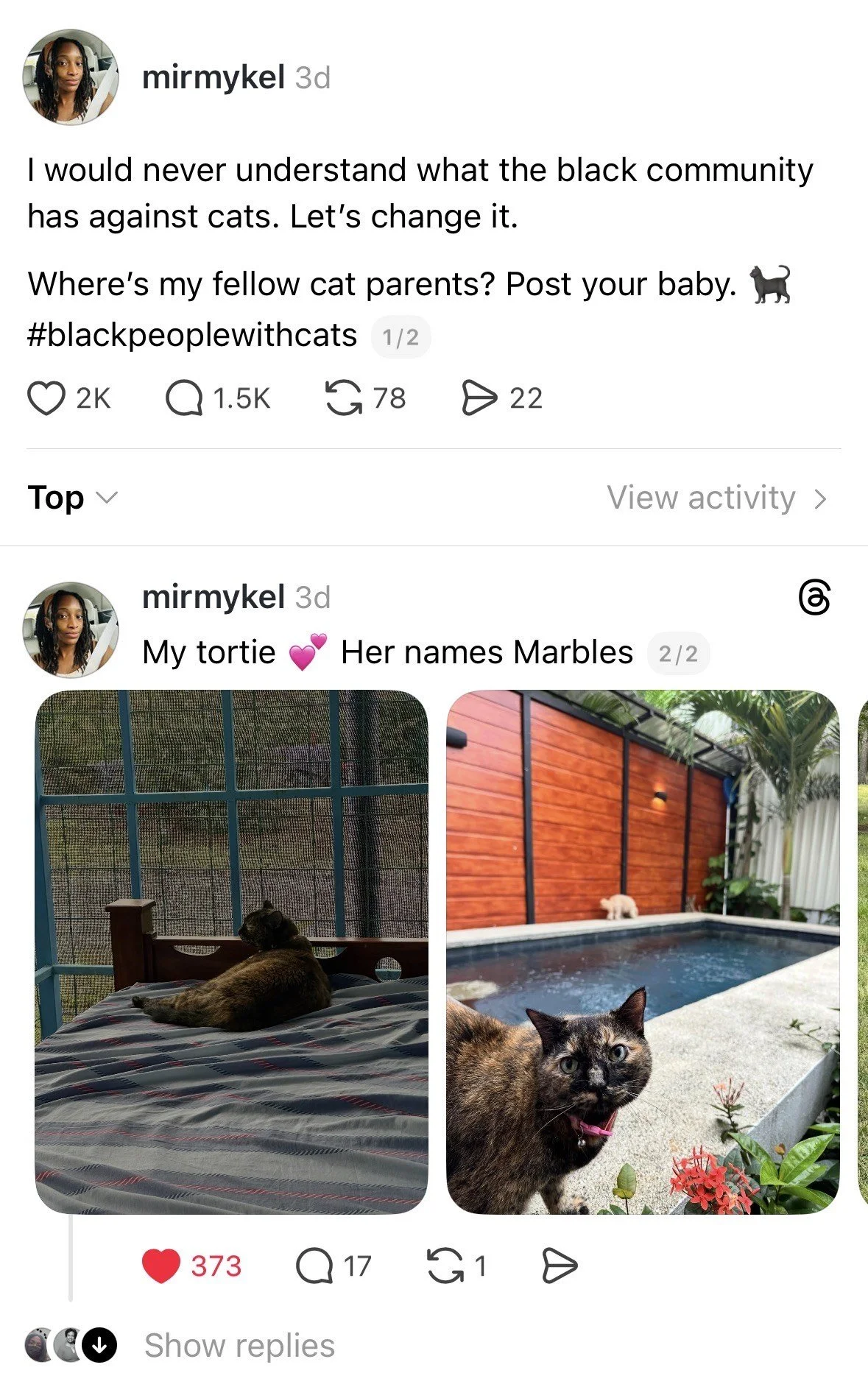
I’ve had my tortoiseshell cat, Marbles, for almost 11 years. Over the years, she has been a constant in my life, experiencing my many phases and life transitions with me. Marbles has also gone through many stages, as she’s now considered an elder cat. Over the years, Marbles has developed a trust in me and comfort that would warm the heart of any pet parent. She’s literally my child. My enthusiasm for cats or animals in general was present as a child, but as I grew up, my circumstances changed.
For my family, having a pet wasn't a priority, as we were already struggling to feed ourselves and faced instability at home. Pets were either lost or rehomed, and my grandmother’s dislike of pets meant I didn't have one for most of my remaining childhood. This experience seems to be common amongst those who grew up in poverty or with older generations, partially in the black community (at least where I grew up). I often wonder how having a pet would have impacted my household and the broader community. I decided to research the effects that having a pet has on individuals and families, as well as common stigmas. What I found was an overwhelming amount of research pointing towards pets' positive impacts on mental health.
Negative History and Stigmas Impacting Pet Care
Although many have legitimate reasons for not having a pet, such as allergies or a lack of time to care for them, there are also negative stereotypes that have caused an aversion to pets for some. As a cat mom, I’m well aware of the negative stereotypes about cats. There are superstitions of black cats causing bad luck, or that all cats are aggressive and will cause harm. Cat lady fear-mongering has existed for years, where single women are shamed for having a few cats, often portrayed as the “crazy cat lady.” Although dogs tend to have a better reputation, their history of fights, wars, and police brutality has caused some to see them as aggressive and threatening. And yes, some breeds are notably aggressive, but training and a loving environment can reduce some of those genetic predispositions to aggression.
Pet’s Improving Mental Health and Wellbeing
Whether you have a cat, dog, or any other pets, having one adds something special to your life. Yes, they are a responsibility, but they do give back in their own way. With about 68% of US households having a pet, it's clear these fur babies add value. Rover conducted a study showing that pet parents had a better quality of life than people without pets. Being a pet parent increases companionship, connection, exercise, physical health, purpose, and overall well-being.
Mental Health Benefits Include:
Reduced stress and anxiety
Emotional support
Routine and structure
Social bonding
Pets, Community, and Mental Health
When it comes to Millennials and Gen Z, pets are once again a staple in the American home, but with some notable changes. People are marrying less, having fewer children, and having pets, even in singlehood is becoming more the norm and outgrowing old stereotypes. There’s a growing number of cat dads, which is beginning to defy gender norms and challenge the “man's best friend” rhetoric. Cultural shifts are also noted among Black millennials and Gen Zers, who are more comfortable with cats than past generations. This week, I took to Threads to engage the community on this topic:

Click to view Threads
@Mirmykel
Click to view Threads
@Mirmykel
